October in San Diego feels like summer that won’t quit.
Then the wind shows up.
Hot, dry Santa Ana gusts roar down from the mountains and out toward the coast. They dry out everything in their path. And they test every tree in your yard.
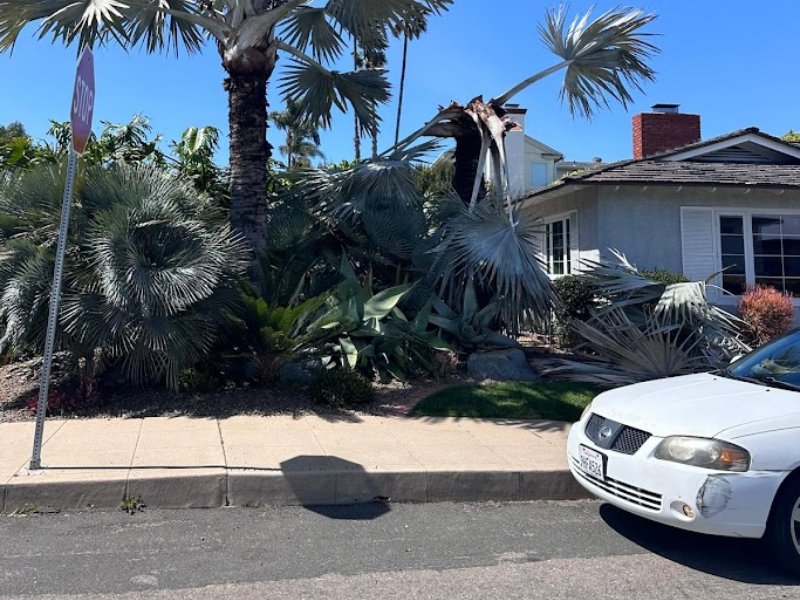
Long limbs snap. Weak branch joints split. Tall eucalyptus and palms come down on roofs, cars, and power lines.
The good news? Professional tree cutting in San Diego can lower that risk a lot, and now is the time to do it.
Why Santa Ana Season Is So Hard on Trees
Santa Ana winds aren’t a single storm. They come in waves.
Cal OES notes that the season runs from October through December, with several major wind events possible before winter rain arrives. One meteorologist compared them to “having a blow dryer on our vegetation.”
That’s tough on trees for a few reasons:
- Dry wood: After a long, hot summer, branches are brittle and break more easily.
- Wrong direction: Santa Anas blow from the east, opposite our usual ocean breeze. Trees aren’t built to brace that way.
- Sudden gusts: Strong bursts hit hard and fast, with no time for trees to flex.
- Repeat events: Each windstorm weakens damaged limbs a little more.
The San Diego Trees Most at Risk
Some trees handle wind well. Others are known troublemakers.
Eucalyptus
Eucalyptus is everywhere in San Diego County. It’s also one of the most common trees in California failure reports.
The California Tree Failure Report Program has logged hundreds of blue gum eucalyptus failures. Branch and root failures made up most of them. Tall height plus heavy limbs makes them a real wind risk.
Palms
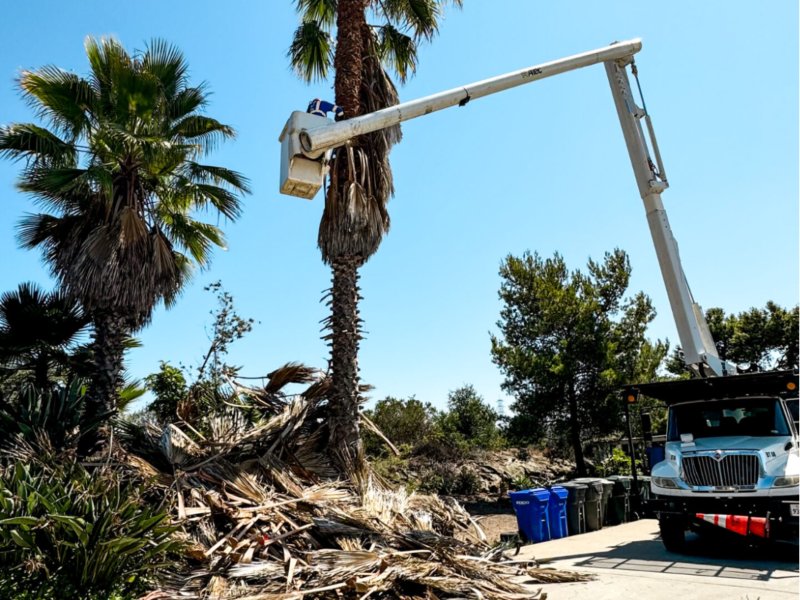
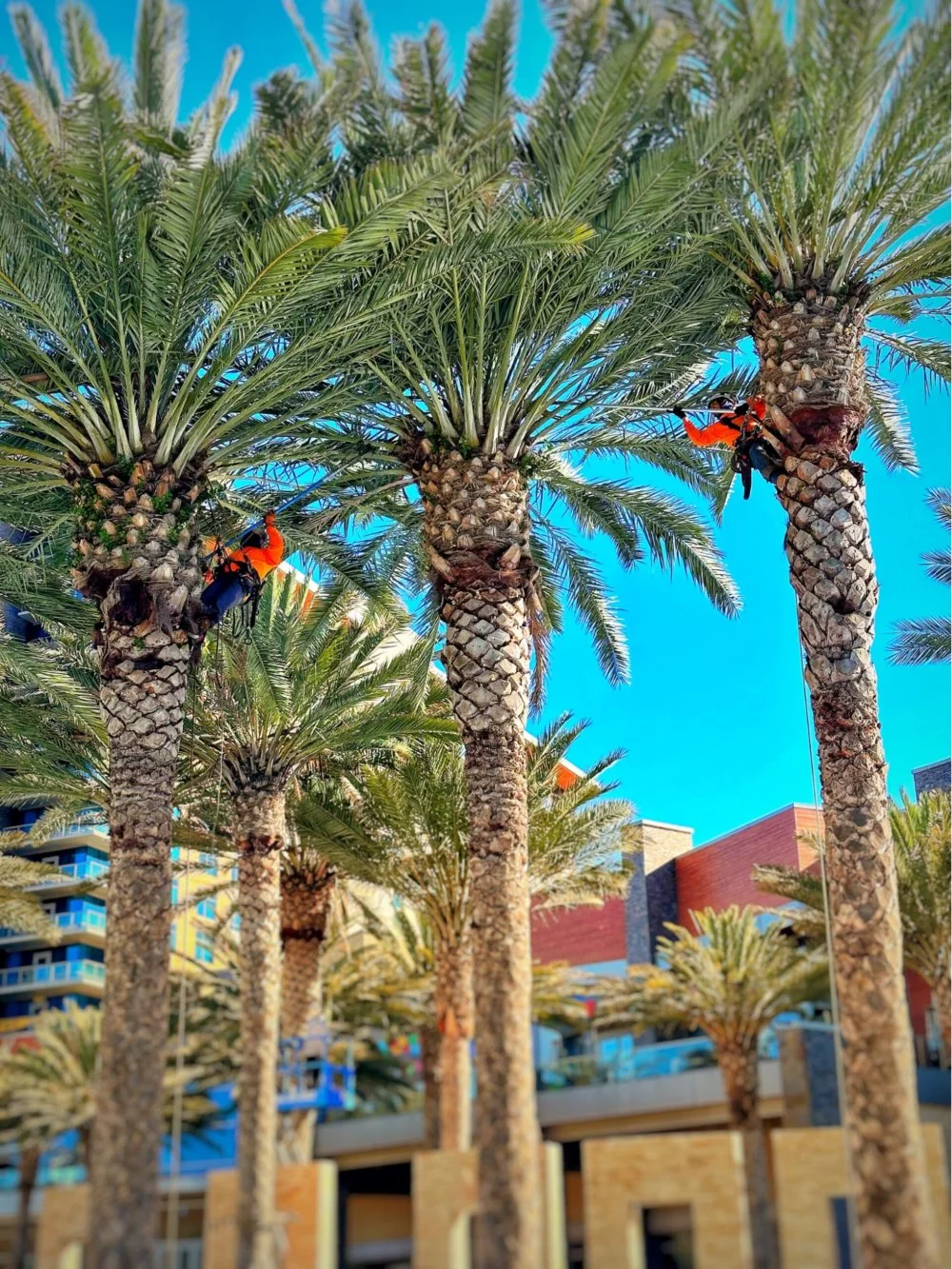
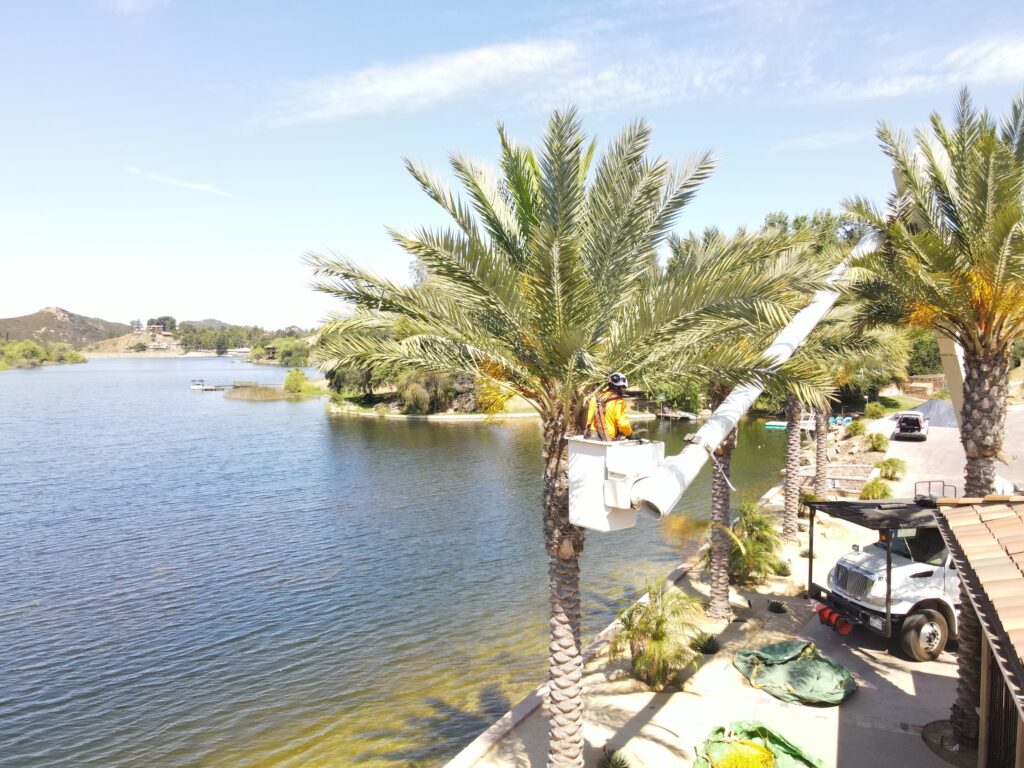
Tall palms can drop heavy dead fronds and seed pods in strong gusts. Untrimmed palms also hold dry “skirts” that catch wind and fuel fire.
Pines and Cypress
Dense pines and Monterey cypress catch a lot of wind. Thick canopies act like a sail.
Fast-Growing Trees
Fast growers often have weak wood and tight branch joints that split under stress.
How Tree Cutting Lowers Wind Risk
Good tree work isn’t about chopping a tree down to a stump. It’s about smart, targeted cuts.
Here’s what a professional tree cutting service focuses on:
- Removing dead wood: Dead branches are the first to snap. Taking them out stops them from becoming flying debris.
- Thinning thick canopies: Selective thinning lets wind pass through instead of pushing the whole tree.
- Cutting back limbs over buildings: Branches hanging over your roof, driveway, or patio get shortened or removed.
- Reducing end weight: Long, heavy limbs get trimmed back so they put less stress on weak joints.
- Spotting trees too weak to keep: Sometimes the safest choice is tree removal before the tree removes itself.
This is real wind damage prevention. A balanced, lighter tree is far more likely to ride out a gusty night.
Warning Signs You Can Check Yourself
You don’t need to be an arborist to spot trouble. Take a slow walk around your yard and look for:
- Dead or leafless branches in the upper canopy
- Cracks or splits in the trunk or large limbs
- V-shaped branch joints with bark pinched inside
- Mushrooms or soft wood near the base, a sign of decay
- A new lean or soil lifting on one side
- Hanging broken limbs left from earlier storms
- Branches touching your roof, gutters, or wires
Spot any of these? It’s time for a professional look. Trees that are struggling with pests or disease can also benefit from plant health care.
Keep Clear of Power Lines
Branches near overhead lines are a serious tree safety issue.
Never try to trim those limbs yourself. SDG&E handles work near its power lines and keeps a clearance of at least 10 feet. Call them if branches are close to the wires.
For trees on your property away from the lines, a trained crew can safely handle the rest.
Why Cutting Before the Winds Is Cheaper
Waiting until after a storm almost always costs more.
Emergency cleanup means:
- Higher urgency costs for crews working fast
- Roof, fence, and car repairs on top of tree work
- Insurance claims and deductibles
- Safety risks for your family
The National Weather Service warns people to stay away from trees and power lines during high winds. That’s because falling limbs are a real danger.
Planned tree cutting in San Diego costs less, takes less time, and happens on your schedule. Not at 2 a.m. during a windstorm.
Local Crews Who Know San Diego Trees
CM Precision Tree and Landscape Maintenance Inc. is a trusted San Diego tree service.
We serve San Diego, El Cajon, Alpine, La Mesa, Santee, Poway, Chula Vista, Lakeside, and nearby communities. East County homes see some of the strongest Santa Ana gusts, so we know what local trees face each fall.
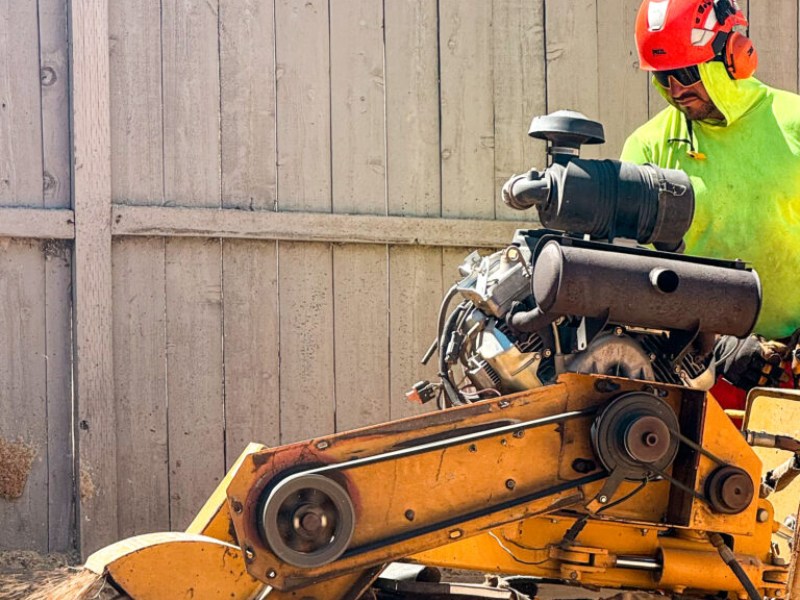
Need a stump cleared after a removal? We also offer stump grinding to finish the job.
Get Ahead of the Gusts
Santa Ana season is already here, and more wind events are on the way.
Don’t wait for the next red flag warning. Schedule tree cutting in San Diego now and give your trees a better chance to stand strong.
Call 619-361-7493 or contact us for a free estimate.